
Siri AI Is Here: What Apple’s New Assistant Changes for Everyday AI
September 27, 2026
Apple’s latest software release marks a meaningful change in how its devices interact with generative AI. The new Siri AI is no longer positioned only as a voice command interface: Apple says it can use personal context, understand what is on screen, answer broader questions, and take actions across apps.
That shift matters because it moves consumer AI closer to the same “do something for me” model that has been driving agentic software elsewhere. But Apple is taking a distinctly integrated route: the assistant is tied to the operating system, the user’s existing data, and Apple’s app ecosystem.
What actually changed?
Apple describes Siri AI as a new version of Siri powered by the next generation of Apple Intelligence. It can draw on information such as messages, emails, and photos to answer questions in context, while new systemwide app actions allow it to perform tasks such as drafting an email or editing and sharing photos.
The important difference is not simply better answers. It is context plus action. A traditional assistant waits for a command; a more capable assistant can interpret what the user is trying to accomplish and connect that intent to the right application.
Why personal context is the bigger story
Most AI assistants start with a blank conversation unless a service deliberately supplies additional context. Apple is building the opposite experience: Siri AI is designed to understand information already present on the device and use it when responding to requests.
That can make ordinary requests much more useful. “Find the photo from last weekend” or “draft a message about the document I just received” can potentially become contextual tasks rather than generic prompts.
It also raises the engineering bar. Once an assistant can reason over personal information, privacy is no longer just about whether data leaves the device. It is also about which apps, services, models, and actions are allowed to access that information.
Apple is mixing on-device and server-side AI
Apple’s architecture is not simply “everything runs locally.” The company notes that certain Apple Intelligence features rely on server-side models and are subject to daily usage limits. Apple says expanded access to some of these capabilities will be available for a fee in the future.
This creates an interesting hybrid model. The device remains the place where the user experiences the assistant, while some requests can depend on cloud-based computation. For developers and security teams, that makes data-flow design just as important as model quality.
The rollout is also deliberately limited
Siri AI began rolling out in beta in English with Apple’s 2027 software releases. Apple says French, Japanese, Korean, Portuguese, and Spanish support is planned for the following month. The company also says Siri AI is initially unavailable in the European Union on iOS, iPadOS, and watchOS, and unavailable in China while regulatory requirements are addressed.
Those restrictions are a useful reminder that deploying AI at consumer scale is not only a model problem. Language coverage, regional rules, privacy requirements, infrastructure capacity, and product policy all affect what users actually receive.
What developers should learn from Siri AI
1. Context beats raw model power in many workflows
An assistant becomes substantially more useful when it knows what the user is looking at, what information they have already received, and which application should perform the next step.
2. Actions need clear boundaries
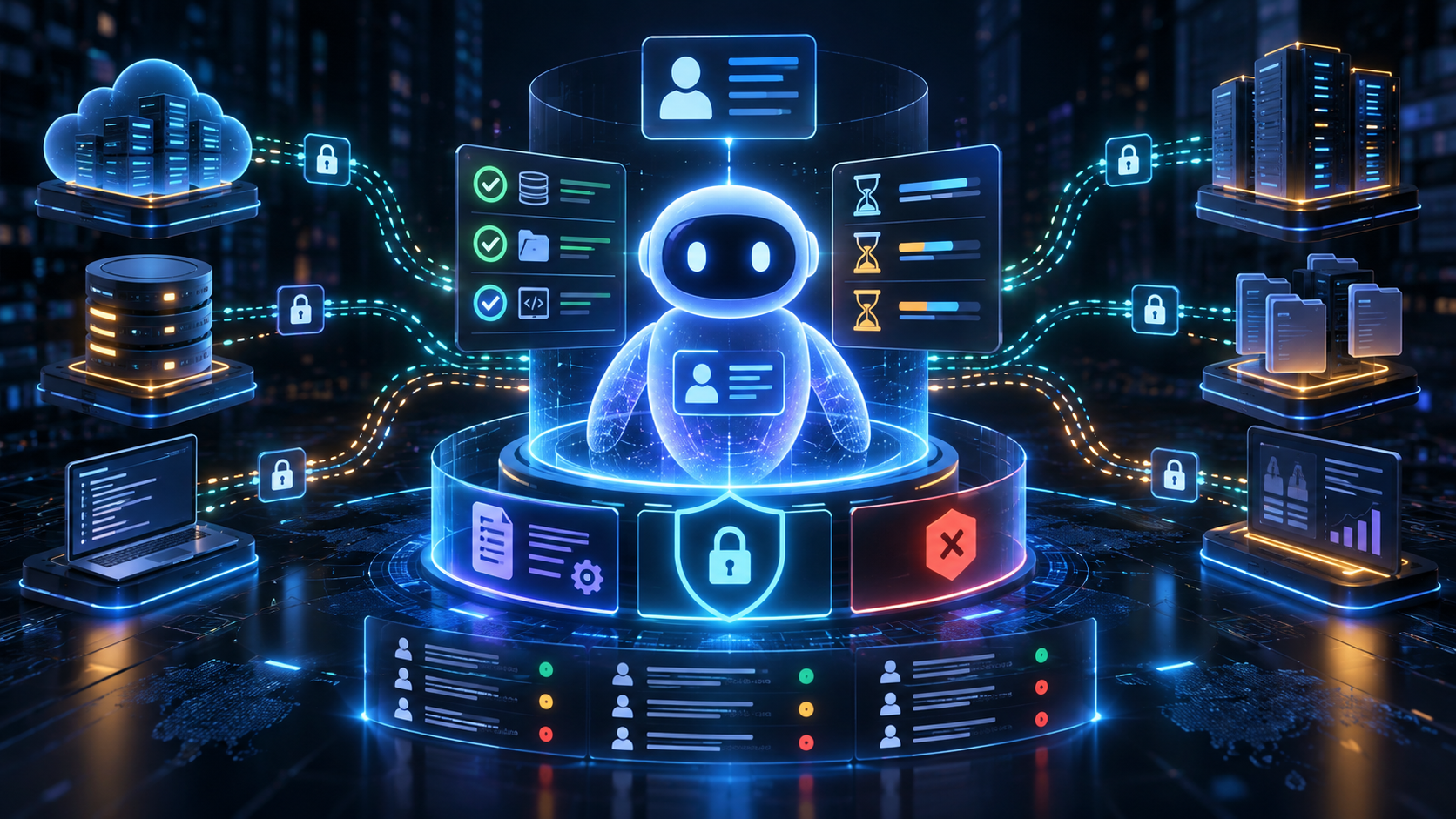
Reading information and changing information are different security events. AI products that can take action should make permissions, confirmation requirements, and auditability explicit.
3. The operating system can become the agent platform
Apple’s approach suggests that the next generation of assistants may be less about opening a separate chatbot and more about embedding intelligence into the operating system and existing apps.
4. Availability is part of the product architecture
Regional restrictions and server-side usage limits are not minor footnotes. They affect application behavior, user expectations, support requirements, and the developer experience.
How this fits the broader AI shift
Future Tech Diaries has covered the engineering controls required when AI agents move from answering questions to taking actions. For more background, see our recent guide to AI-agent security boundaries.
Siri AI brings a similar idea into a mainstream consumer interface, but with a different emphasis: personal context and deep operating-system integration.
That makes Apple’s rollout worth watching even if you are not an Apple developer. The underlying product pattern is spreading across the industry: AI is becoming a layer that sits between intent and software execution.
The competitive question is therefore changing. It is no longer only “Which assistant gives the best answer?” It is increasingly “Which assistant can understand enough context to complete the task while keeping the user in control?”
The practical takeaway
Siri AI does not make every Apple device an autonomous computer, and its current rollout has meaningful limits. But Apple’s September release shows how quickly AI assistants are moving from conversation toward context-aware action.
For users, that could mean fewer app switches and less manual information gathering. For developers, it points toward a future in which AI capabilities are expected to understand application state, use personal context responsibly, and execute bounded actions rather than simply generate text.
The most important change may be subtle: the assistant is becoming part of the interface itself.

Comments
0To comment, choose whether you want to register or continue as a guest.