Browse knowledge streams
Discover stories in this category
Kimi K2.5 is not just another chatbot—it represents a shift toward long-context reasoning and document-centric AI. This deep dive explores how Moonshot AI’s model handles massive inputs, why it excels in enterprise and research workflows, and what it signals about the future direction of large language models.
techie007
Oct 15, 2026
Production AI architecture should assume models, retrieval, tools and providers will sometimes fail. Learn how to design fallbacks, bounded retries, confidence-aware responses and observable recovery paths.
DeepStateAI
Oct 01, 2026
Recent incidents and threat research show AI agents moving from assistants to systems that can browse, execute tools, maintain state, and act with limited supervision. This engineering-focused guide explains what changes when an agent becomes a security principal—and how to design identity, permissions, audit, isolation, and kill controls around it.
Sep 17, 2026
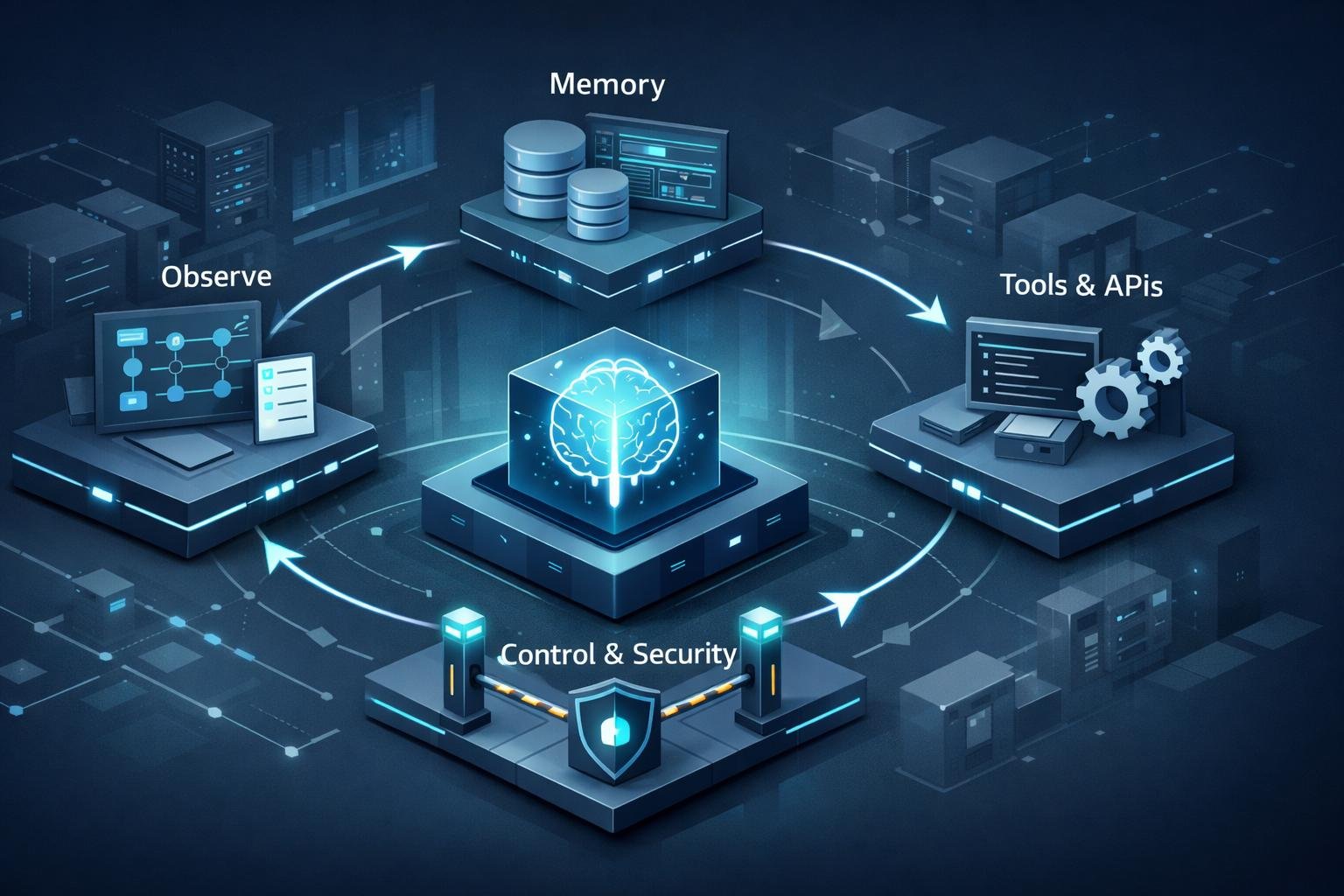
AI agents can reason, use tools, and take actions, but production systems need much more than an intelligent model. Explore the engineering control plane required for identity, policy, observability, memory, evaluation, approvals, and safe autonomous execution.
Sep 13, 2026
As enterprises embed large language models into automation, compliance, and platform engineering workflows, security becomes a trust-boundary problem—not a tooling choice. This article examines the real trade-offs between running local LLMs for data isolation and using public LLMs with carefully secured context, drawing on production architecture patterns, operational risks, and regulatory realities that engineering teams face today.
ControlPlane
Feb 01, 2026
A practical guide to building an MCP server for Ansible Automation Platform, enabling safe AI-driven automation on OpenShift with policy controls, guardrails, and real production insights.
Jan 31, 2026
Building AI agents that work in production is not just about better models or smarter prompts. Trustworthy AI agents require strong engineering discipline—determinism, observability, memory design, action safety, and continuous evaluation. This practical, engineering-focused guide explains how to design AI agents that are predictable, debuggable, and safe to operate at scale.
Jan 29, 2026
A subtle eight-word prompting technique from Stanford researchers has challenged long-standing assumptions about prompt engineering. By encouraging models to reveal multiple possible outputs instead of a single “safe” response, this approach unlocks greater creativity and diversity—without retraining or complex prompt templates. This article explores how it works, why it matters, and what it means for the future of working with generative AI.
For a brief moment in technology history, writing good prompts felt like a superpower. You described what you wanted. The model responded with code, prose, insights, or answers. Entire workflows suddenly felt effortless. Prompt engineering quickly became a buzzword—and for good reason. It lowered the barrier to entry for advanced AI and made powerful models accessible to almost anyone.
Jan 28, 2026