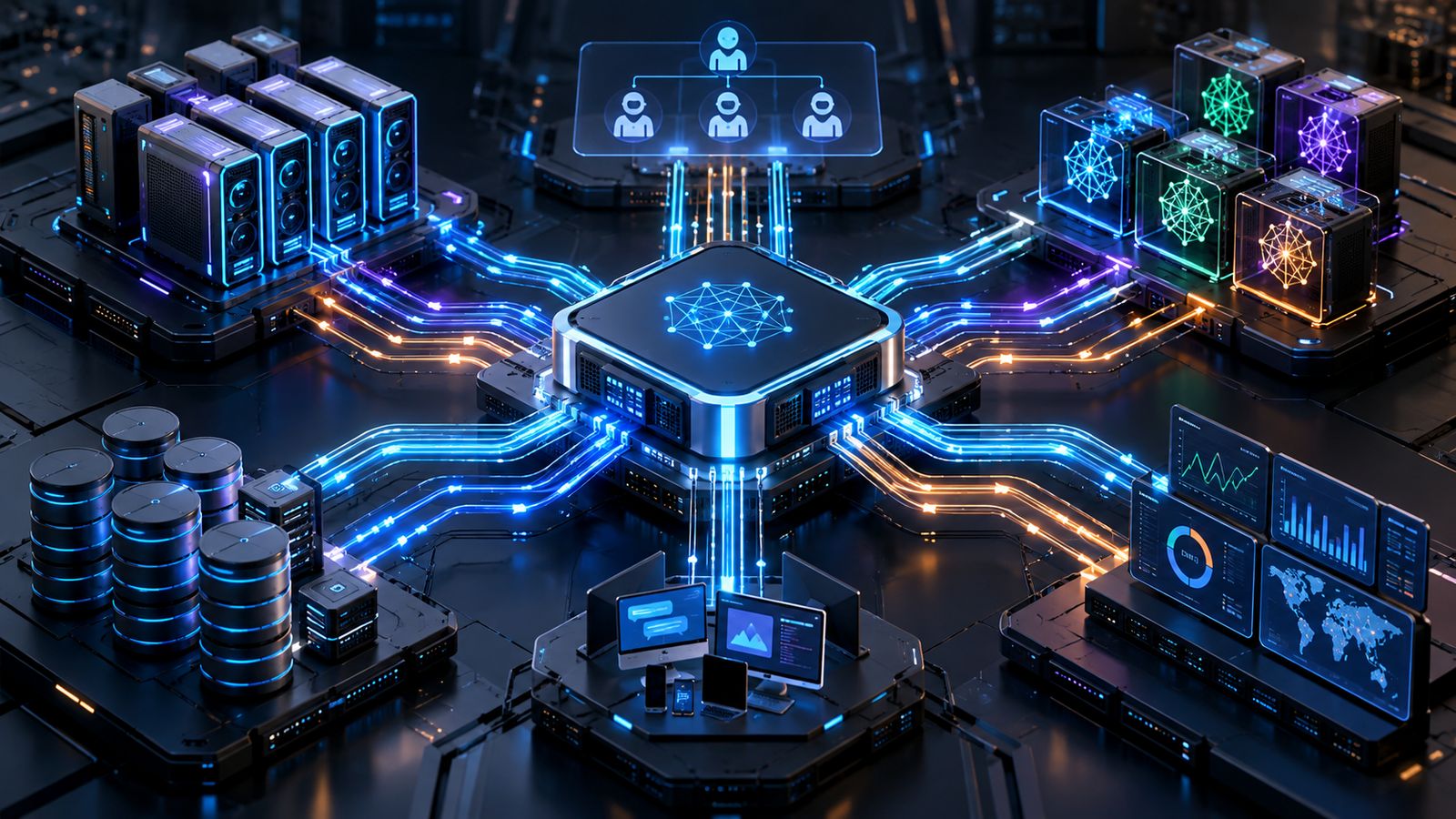
AI Inference Networking Is Becoming a First-Class Architecture Layer
AI infrastructure discussions often focus on GPUs, model size and inference engines. But as applications become agentic, another layer is becoming just as important: the network path between an application and the models, tools and inference backends it depends on.
A modern AI request may involve routing to different models, calling multiple inference services, retrieving context, invoking tools and coordinating several agent steps. That makes inference networking more than plumbing. It becomes part of the system’s performance, reliability, security and cost architecture.
Why the Architecture Is Changing
Traditional application architectures often send a request to one backend and wait for a response. Agentic AI can turn one user intent into a sequence of model calls and tool interactions. Google Cloud describes this shift as a chain reaction in which an agent decomposes a goal into tasks that may be handled by specialized agents. citehttps://cloud.google.com/blog/products/compute/ai-infrastructure-at-next26
That creates new pressure on routing. The system may need to choose a model based on latency, context length, modality, cost, availability or task complexity. The decision is no longer simply “which endpoint is up?”
Three Problems the Network Layer Must Solve
1. Intelligent model routing
Inference gateways can become the decision point for selecting the right backend. A lightweight classification task may go to a smaller model, while a difficult reasoning step can be routed to a more capable model. Centralizing that decision also makes policy and measurement easier.
2. Predictable latency
For interactive AI, average latency is not enough. Teams need visibility into time-to-first-token, queueing, backend saturation and network overhead. Google Cloud’s recent guidance on LLM inference emphasizes the trade-off between latency and throughput and the need to operate near an efficient frontier rather than optimizing one metric in isolation.
3. Governance across multiple backends
Organizations increasingly run multiple models and inference services. A centralized networking layer can provide consistent authentication, authorization, traffic policy, observability and failure handling instead of implementing those controls independently in every application.
What an AI Inference Gateway Should Expose
A useful gateway should make the following signals visible:
- Model and version: which model actually served the request.
- Routing reason: why that model or backend was selected.
- Latency: including queueing, network and model-generation time.
- Token usage: input and output volume for cost attribution.
- Backend health: saturation, errors, timeouts and capacity.
- Policy decisions: authentication, authorization and data-handling controls.
- Trace context: correlation across multi-step agent workflows.
Google Cloud published a September 2026 reference architecture specifically around networking for AI inference model serving, reflecting how this layer is becoming an explicit architectural concern rather than an implementation detail.
Inference Optimization Is a Full-Stack Problem
The networking layer cannot compensate for inefficient model serving. Modern inference stacks combine compiler optimizations, quantization, caching, batching and scheduling to improve throughput and latency. NVIDIA’s TensorRT-LLM documentation, for example, describes an inference stack designed to build optimized engines and runtimes for LLM serving.
The important architectural point is that these optimizations interact. Better batching can increase throughput while affecting latency. Aggressive caching can reduce repeated computation but requires careful memory and eviction policies. Routing more requests to one backend can improve utilization until it creates a new bottleneck.
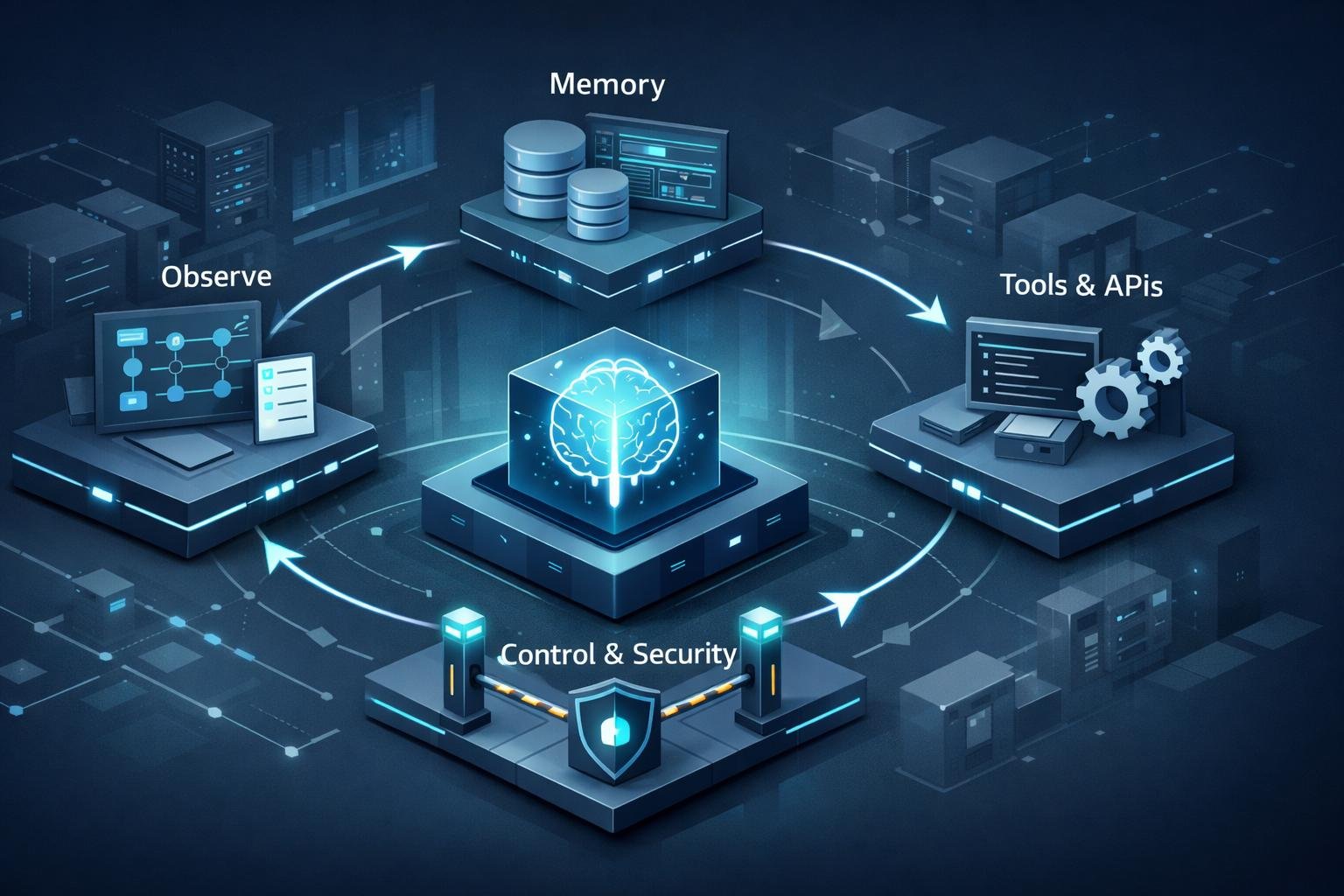
A Practical Reference Architecture
For production teams, a useful design is a layered path:
- Application layer: receives the user or business request.
- Agent orchestration: plans work and determines which model or tool is needed.
- Inference gateway: authenticates, routes, rate-limits and records telemetry.
- Model-serving layer: runs optimized inference engines across available accelerators.
- Data and tool services: provide retrieval, APIs and external actions under explicit policy.
- Observability plane: correlates latency, cost, errors and model behavior across the entire workflow.
This separation makes it possible to change models or serving infrastructure without rewriting every application. It also creates a natural control point for experimentation and gradual rollouts.
What Engineering Teams Should Measure
Instead of tracking only tokens per second, teams should measure business-relevant units such as cost per successful task, latency per completed workflow and error rate by model route. For agentic systems, one user request may generate many inference calls, so per-request metrics can hide the real infrastructure cost.
A mature inference platform should therefore connect model telemetry to application-level outcomes. If a faster model increases retries or reduces task completion quality, its apparent performance advantage may disappear at the workflow level.
The Strategic Shift
The next stage of AI infrastructure is not simply about buying faster accelerators. It is about coordinating models, runtimes, networks, data and policies as one serving system.
As agentic workloads grow, the inference gateway and network layer are likely to become strategic infrastructure. The teams that treat routing, observability and governance as first-class design concerns will have more flexibility to adopt new models without repeatedly rebuilding the application stack around them.
Conclusion
AI inference is becoming a distributed systems problem. Model quality still matters, but production performance increasingly depends on everything surrounding the model: routing, network paths, scheduling, caching, security and measurement.
For engineering leaders, the practical lesson is simple: design the inference path as an architecture, not an API call. That shift creates the foundation for faster iteration, clearer cost control and more reliable agentic applications.
Sources
- Google Cloud, “Networking for AI inference model serving,” September 30, 2026.
- Google Cloud, “Five techniques to reach the efficient frontier of LLM inference,” March 27, 2026.
- NVIDIA, “NVIDIA TensorRT-LLM” documentation.

Comments
0To comment, choose whether you want to register or continue as a guest.